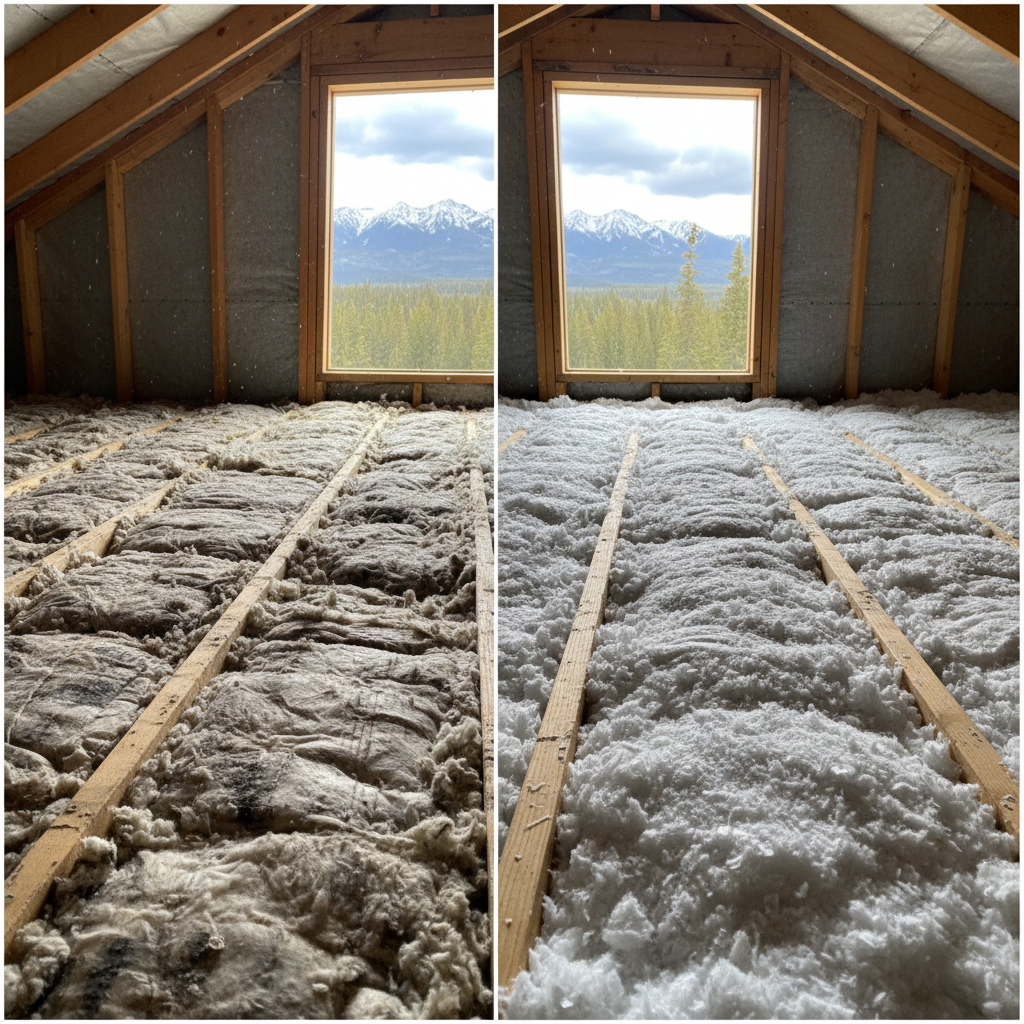
So, you're thinking about insulating your attic, and chances are you've heard about blown-in options. They're pretty popular, and for good reason: they really fill in all those little nooks and crannies better than traditional batts, especially in older homes or attics with weird shapes. But when it comes to blown-in, you're usually looking at two main choices: fiberglass and cellulose. Which one makes the most sense for your Big Sky place? Let's chat about it.
What's the Real Difference?
Both fiberglass and cellulose aim to do the same thing – trap air and stop heat from moving around. We blow both into your attic space using a big hose and a machine, creating a thick, continuous blanket of insulation. But that's pretty much where the similarities end, actually.
Blown-In Fiberglass
This is probably what most folks picture when they think of insulation. It's made from tiny glass fibers, often from recycled glass, spun into a fluffy material. It won't burn easily, and it doesn't soak up much moisture. When we blow it in, it settles into a nice, even layer.
Blown-In Cellulose
Cellulose mostly comes from recycled paper products – think old newspapers and cardboard. Manufacturers treat it with fire retardants and, usually, with pest deterrents. It's a denser material than fiberglass, and it can really pack into tight spots.
Cost: What You Pay Now vs. Later
Let's be honest, money always plays a part. Generally speaking, cellulose tends to cost a little less per bag than fiberglass. This can make the initial installation cost for cellulose a bit lower. But you also have to look at the R-value per inch. Fiberglass usually gives you a slightly higher R-value per inch than cellulose, meaning you might need a little less material to hit your desired insulation level. So, while cellulose might be cheaper by the bag, the final installed price for the same R-value often ends up pretty similar. It's not a huge difference either way, so I wouldn't let price be the only thing you consider.
Performance & Durability in Big Sky Conditions
This is where our local conditions really matter. We get some crazy temperature swings here in Big Sky, from brutal winters to surprisingly warm summers. We also deal with a lot of heavy snow on roofs, which can sometimes lead to ice damming if your attic isn't vented and insulated properly.
- Thermal Performance: Both do a great job. Fiberglass has a good R-value and holds it well over time. Cellulose, being denser, can sometimes give you a slight edge in air sealing, which is super important for stopping heat loss. Its density also helps keep air from moving right through the insulation itself.
- Moisture Resistance: This is a big one for us. Fiberglass naturally resists moisture absorption. If it gets wet, it dries out relatively quickly and doesn't lose its R-value. Cellulose, since it's paper-based, can absorb moisture. If you've got a leaky roof or a ventilation problem, wet cellulose can compact, lose its R-value, and even become a breeding ground for mold. Now, the fire retardants they treat cellulose with also help with mold resistance, but it's still more susceptible than fiberglass. Given our heavy snow loads and the chance of roof leaks, I generally lean towards fiberglass because it handles moisture so much better.
- Settling: Cellulose tends to settle more over time than fiberglass. This means that after a few years, the R-value you first installed might be slightly lower as the material compacts. Fiberglass settles very little, keeping its R-value more consistently.
- Pest Resistance: Cellulose often gets treated with borate, which keeps insects and rodents away. Fiberglass isn't food, so pests generally don't want to live in it, but they can definitely tunnel through it. If you've had pest issues in your attic, the treated cellulose might make you feel a little better.
Installation & Maintenance
Both are pretty straightforward for a professional like Genesis Insulation Company to install. We use special equipment to get a nice, even layer. For homeowners, neither needs much maintenance once it's in, assuming your attic stays dry and well-ventilated. If you ever need to get into your attic for wiring or plumbing, it's easier to move fiberglass aside and then fluff it back into place. Cellulose, being denser, can be a bit more of a hassle to move and replace.
My Recommendation for Big Sky Homes
Look, both fiberglass and cellulose are effective insulation materials. For most Big Sky homeowners, especially considering our climate, I usually recommend blown-in fiberglass. Here's why:
- Better moisture resistance: This is critical with all our heavy snowfall and the potential for roof problems. Fiberglass handles moisture much better, which cuts down on the risk of mold and losing R-value.
- Less settling: You want your insulation to keep its R-value for decades, and fiberglass does a better job of staying fluffy.
- Consistent performance: It's a reliable, proven product that performs well in extreme temperatures without much fuss.
Now, if you're really set on using recycled paper products and you have a perfectly dry, well-ventilated attic with no history of leaks, cellulose can be a good choice. But for that long-term performance and peace of mind in a place like Big Sky – especially in areas like the Meadow or Spanish Peaks where homes often have complex rooflines – fiberglass is generally the safer, more dependable option.
Ultimately, the best insulation is the one that's installed correctly to the right R-value for your home. If you're thinking about upgrading your attic insulation, give us a call. We can take a look at your specific situation and give you an honest assessment.