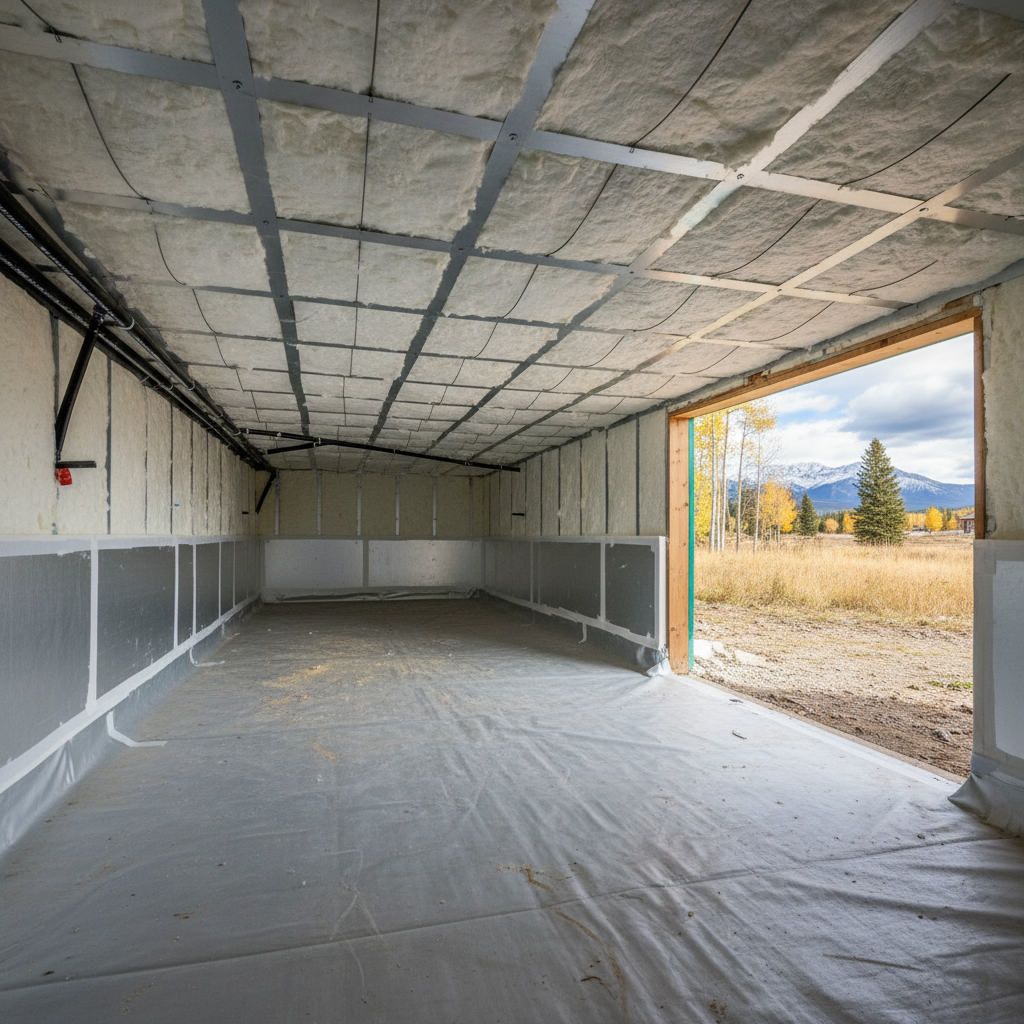
What does it actually cost to insulate a crawl space around here? If you own a home in Big Sky, MT, our mountain winters present serious challenges. When temperatures drop well below zero in neighborhoods like the Meadow Village or up on the Ridge, an uninsulated or poorly protected crawl space will freeze your plumbing and send your heating bills through the roof.
Most local homeowners spend between $2,500 and $7,000 for a professional crawl space insulation project. The exact total swings quite a bit based on square footage, whether you are insulating the subfloor or the perimeter walls, and the current condition of the space.
What Affects the Price Tag?
Every mountain home is different, and a few major factors drive the cost of your specific job:
- Square footage and height of the crawl space
- Choice of material, such as fiberglass batts, rigid foam, or closed-cell spray foam
- Accessibility and tight working clearances
- The presence of moisture, mold, or old, failing insulation that needs removal
Big Sky Insulation looks closely at moisture control because heavy snowmelt and clay-heavy mountain soils create damp conditions under your floors. If moisture is not managed, even expensive insulation will not perform the way it should.
Typical Cost Ranges by Scope
Here is what you can expect to pay for professional installation based on different project scopes:
Subfloor batt insulation is the most budget-friendly route, generally running $1.20 to $2.00 per square foot. It works fine in milder setups, but it is vulnerable to moisture if your crawl space is not properly sealed. Closed-cell spray foam applied to rim joists or crawl space walls typically ranges from $3.50 to $6.00 per square foot. It provides an airtight seal and a high R-value, which makes it popular for our subzero winters. Full crawl space encapsulation, which combines rigid foam, heavy vapor barriers, and sealed seams, ranges from $5.50 to $8.50 per square foot.
What Should Be Included in an Honest Quote?
A reliable contractor will not just throw a blanket number at you. Your quote should clearly itemize material costs, labor, old insulation disposal if needed, and a heavy-duty vapor barrier. Watch out for vague estimates that leave room for surprise change orders once work begins underneath your house.
How to Avoid Overpaying
Do not automatically take the lowest bid, because cheap labor often means rushed air-sealing or skipped prep work. Get two or three detailed quotes from local tradespeople who understand high-elevation building science. Ask them why they recommend a specific material for local weather conditions. A proper install done right the first time keeps your floors warm and saves you from costly pipe repairs down the road.